Pradeeban Kathiravelu - invited lecture at SSE
Pradeeban Kathiravelu, an assistant professor at the Department of Computer Science and Engineering at the University of Alaska Anchorage (UAA), USA, will give an invited lecture at the SSE. He is currently a visiting researcher at the Juraj Dobrila University of Pula within the project Human-Centered System Design for Equitable and Sustainable Digital Societies (EQUISYS).
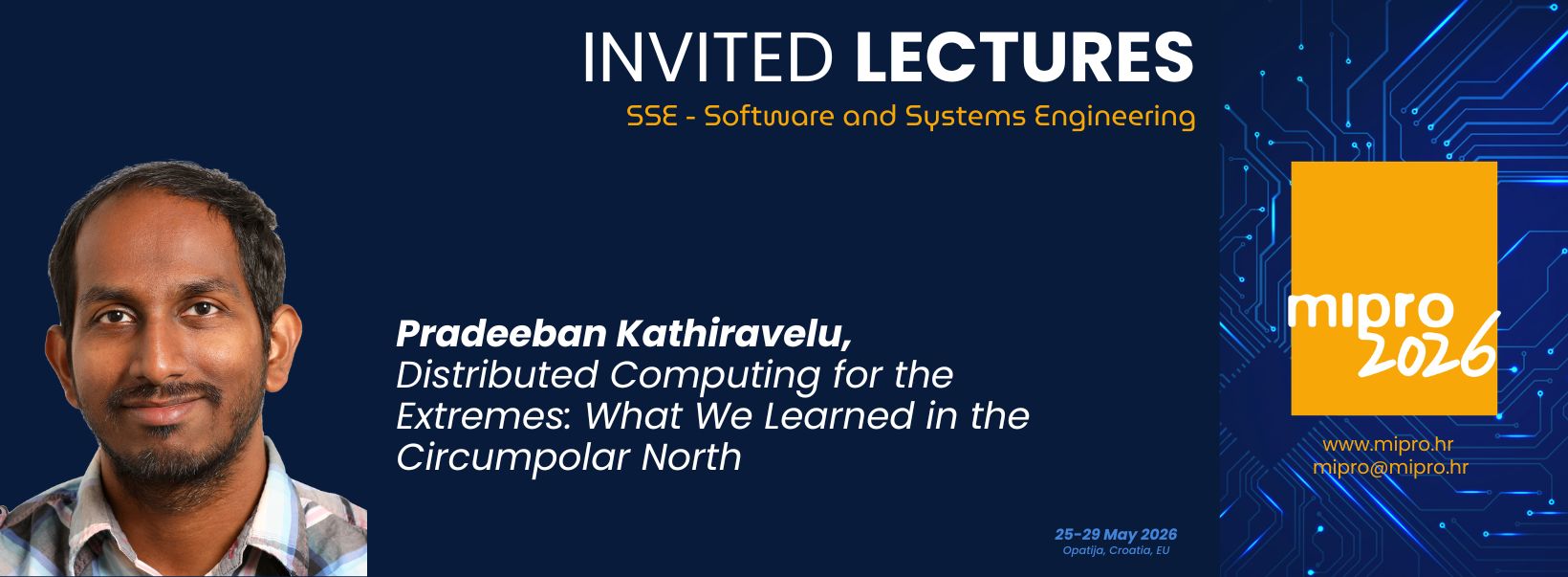
The remoteness of the circumpolar north brings challenges and opportunities for distributed computing and its applications. The circumpolar corth is typically defined as the Arctic Circle and surrounding Arctic Ocean territories in eight Arctic regions/nations: Alaska (United States), Canada, Finland, Greenland (Denmark), Iceland, Norway, Russia, and Sweden. Characterized by unpredictable weather, climate extremes, and remoteness, these Arctic regions demand better infrastructure and computing resources to serve their communities. Until recently, many of these rural Arctic communities lacked stable Internet access.
However, the growing reach of Low Earth Orbit (LEO) satellite networks, such as Starlink, has made the Internet accessible and more affordable to circumpolar communities. While capital expenses for setting up the LEO satellite network access for end-user Internet access still remain largely unaffordable for many end-users, it has already been useful for organizations such as community clinics. Furthermore, it is expected that such installation and operational costs will become more affordable for more communities over time.
In light of the changing Internet landscape, we examine how the circumpolar north could leverage distributed computing to address some of its critical needs. Two urgent use cases are healthcare and the climate crisis. First, remote Arctic communities lack access to primary care and specialist care. We examine how telehealth could be an effective alternative, although traditionally, the lack of Internet access and the high latency of the Internet in the circumpolar north have prevented its widespread use in these regions. Second, polar regions are at the forefront of the climate crisis, with the melting Arctic ice and the subsequent Arctic coastal erosion.
Concerning patterns have been observed by studying and predicting the ever-changing Arctic sea ice extent. Mitigation strategies and relocation plans are being developed for coastal Arctic communities that are facing or anticipating catastrophic climate events. We investigate the climate crisis by predicting Arctic sea ice extent. Finally, we wrap up this talk by discussing how distributed computing can help prepare for life in extreme environments, and by extrapolating and generalizing our findings from the circumpolar regions. We discuss how emerging technologies and innovations can better prepare researchers and remote communities for future challenges and opportunities.
----
More about Pradeeban Kathiravelu:
Pradeeban Kathiravelu is an Assistant Professor in the Department of Computer Science and Engineering at the University of Alaska Anchorage (UAA), USA. He is currently a visiting researcher at the Juraj Dobrila University of Pula on the the Human- Centered System Design for Equitable and Sustainable Digital Societies (EQUISYS). Project (PI: Prof. Tihana Galinac Grbac).
Prior to joining UAA, he was a postdoctoral researcher in the Department of Biomedical Informatics at Emory University School of Medicine, Atlanta, GA, USA. He has an Erasmus Mundus Joint Doctorate in Distributed Computing (EMJD-DC) from Universidade de Lisboa, Lisbon, Portugal, and Université catholique de Louvain, Louvain-la-Neuve, Belgium. He also holds an Erasmus Mundus European Master in Distributed Computing (EMDC) from Universidade de Lisboa and KTH Royal Institute of Technology in Stockholm, Sweden.
His research interests lie at the intersection of distributed computing, biomedical informatics, and remote regions. He investigates wide-area network optimizations and big-data innovations to improve telehealth access and equity in rural Alaska and healthcare deserts globally. He also contributes to a range of topics related to the circumpolar north. He enjoys working on open-source projects and mentoring students in undergraduate research and in programs like Google Summer of Code.
[natrag na događanja]
|